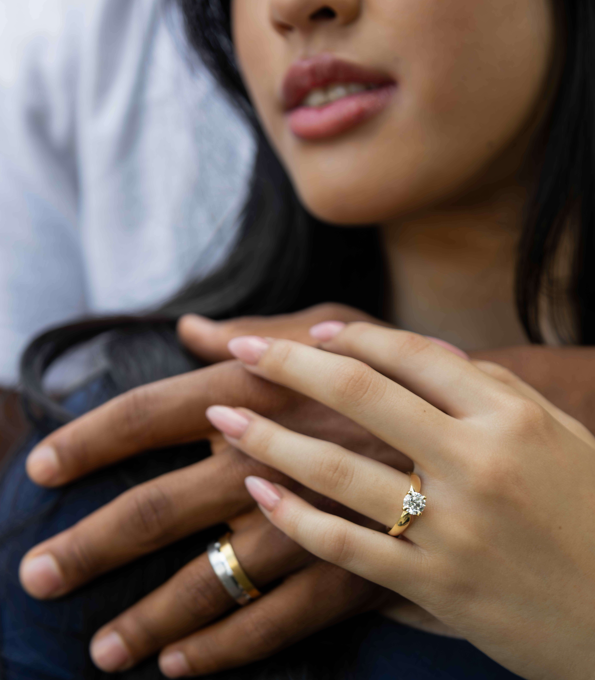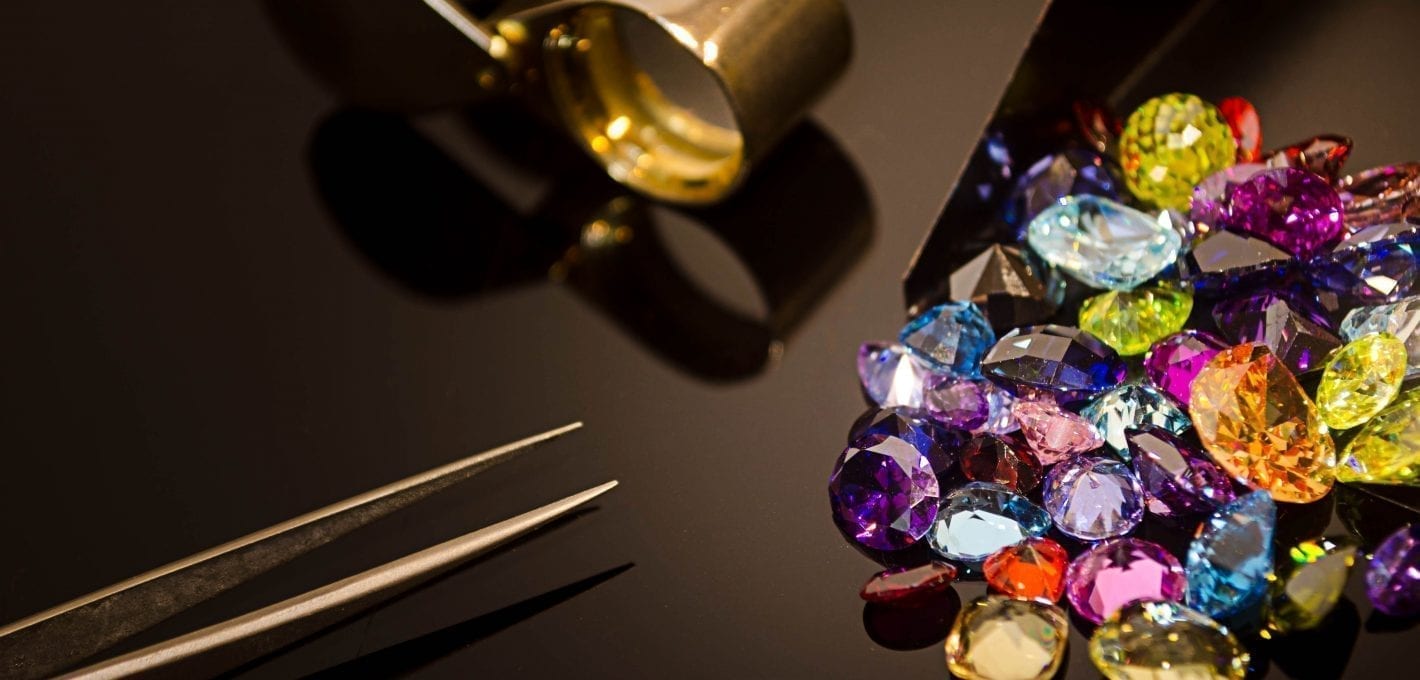
Choosing stones to use in engagement rings is one of the happiest and most anticipated moments of a couple’s life together. A very important and often overlooked part of an engagement ring selection is the gemstone that will get set into the design. Entering a jewellery store can initially be overwhelming, however, being well informed will assist you in this experience & the celebration of your commitment. There are many stones to use in engagement rings.
Here are some guidelines on selecting the best gemstone for your engagement rings:

Deciding on which gemstone to use in your engagement rings…
A great place to start your decision process is with the Mohs(pronounced MOZE) hardness scale. This brings the significant variety of available gemstones down quite a bit. When thinking about the many options of gemstones for your engagement rings, you want a gemstone that will last not only a lifetime but one that will be passed down through generations.
How the MOHS scale will help you decide which stones to use in engagement rings.
In the jewellery industry, we use the MOHS hardness scale to measure gemstones for hardness and durability. We only recommend stones to use in engagement rings that have a hardness scale of 7 and above. A diamond is a 10, making it the most suitable stone for wearing every day.
Another option is tanzanite, which is a 6.5 on the hardness scale. While it’s hard and durable, it is prone to chipping as it’s a brittle stone. The emerald is not easily scratched and has a 7.5 on the hardness scale. It has natural inclusions which do make it prone to chipping. Tourmaline 7.5 comes in pink and green. Using a red or green garnet, which is also a hard stone at 7.5, is a good option for a green gemstone.
The gemstones that aren’t necessarily suitable for engagement rings can be set in a pendant or a pair of earrings where they get no hard wear and tear. They have incredible colour, brilliance and sparkle that will store value.

The colours of stones to use in engagement rings…
Recent years have shown an increase in coloured stones being set into engagement rings.
If one has one’s heart set on having a different colour stone for your engagement rings, we recommend corundum. Corundum is the name of the mineral that the gemstone sapphire and ruby both belong. Sapphire comes in every colour of the rainbow, except red. As soon as corundum or sapphire becomes red, it’s known as a ruby. Making the ruby and sapphire part of the same gemstone family. Corundum on the Mohs scale is 9.0.
Diamonds too have different grades of colour as well as a variety of intensities. Diamonds are primarily shades of white to yellow, however, diamond-like sapphires come in many different colours. These are most suitable for engagement rings based on their hardness, size and variety of colours.
Shapes of gemstones and what stones to use in engagement rings.
The classic round cut diamond is the most popular for engagement rings. Gemstones and diamonds come in many shapes and sizes, however, there has been an increase in alternative diamond shape selections for engagement rings as well as other gemstones.
In our opinion, elongated shapes are ideal for rings because the finger is a linear object. An oval, rectangle or marquise shape accentuates the length of the finger and makes ideal engagement rings.

Why do we recommend the diamond for your engagement rings…
There is a very good reason why diamonds are the most popular gemstones used in engagement rings. Diamonds are at a 10 on the hardness scale and there are many options. You’ve got all the different grades of colour; you can even go for the fancy yellow colour diamonds.
Laboratory diamond vs a Natural diamond in engagement rings.
If you compare laboratory-grown diamonds versus natural diamonds particularly when it comes to selecting one for your engagement rings or wedding rings, the latter is definitely the better option. It has undergone a process of millions of years that makes your diamond one of a kind. In our environmentally conscious society, some believe that diamonds grown in laboratories are better, however, to make these artificial stones, the process uses extreme amounts of energy and electricity over short periods of time, which negatively impact the environment.
Conclusion
Having broadened your knowledge about choosing the best possible stone for your engagement rings, love and our skill of crafting your ideal diamond rings will result in the perfect masterpiece.
Choose a gemstone that will mean something to your relationship or something that will make the final choice more personal.