Heirlooms & Inheritance. This is an important question that one should consider when thinking about your future. This may seem an odd thing to include but, as it can have huge consequences financially to your and emotionally for your family, it is important to have a clear plan for your heirlooms. Families have been ripped apart over jewellery that has been left to them by their parents or grandparents.
With 80 years’ experience in the jewellery industry and having seen 5 generations of families come and go, Jack Friedman Jewellers has obtained unique insights and advice on how to manage this vexing issue.
Jewellery is an incredibly emotional and valuable part of a loved one’s legacy; and when they pass away there is very little that we can hold on to that has much meaning as a piece of their jewellery.
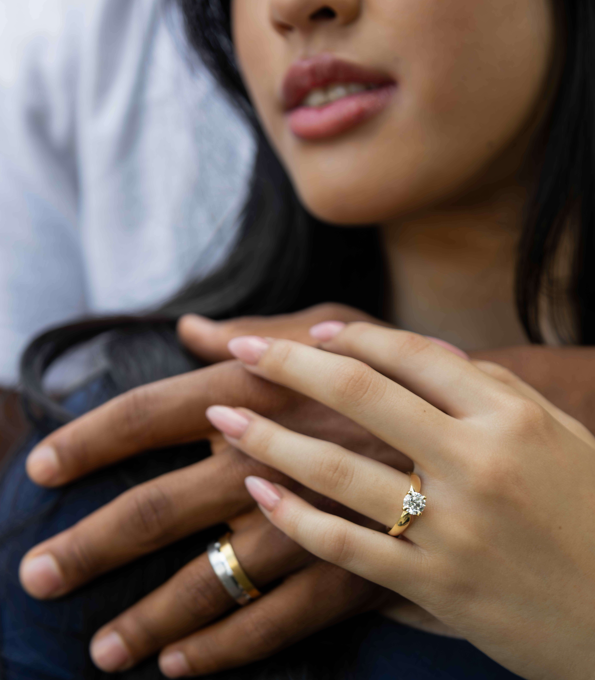
Of all the items that that person leaves behind, jewellery is without a doubt the closest and most personal reminder of that person and the life they lived while wearing the piece. For a woman, a diamond engagement ring would have been worn every day from marriage till death, while for a man it may be his wedding band, pocket watch or cufflinks worn on his wedding day.
Heirloom jewellery pieces are generally selected by or for someone very important to them. These engagement rings, wedding rings, pocket watches, cufflinks or bracelets are worn close to the skin, as a memory and celebration of the life they lived. Heirlooms are more than just a piece of jewellery, it is a constant reminder of happy memories you created with them, the spiritual connection to the loved one and a way of holding them close to your heart.
It is safe to say, that the possible heirs should not be left to make the decision of what is done with the jewellery or dividing the jewellery between themselves. No matter how loving and wonderful the relationship is between them, this decision will surely lead to conflict between the heirs. One other mistake that you shouldn’t make, however good the intention, is to secretly distribute your jewellery to your heirs. The result will cause division and animosity between the heirs.
As unique as each piece of jewellery, are your relationships with friends and family. Jewellery is personal and one should look at distributing your heirlooms based on your relationships and connections with each family member; eg: A specific necklace was “gifted when you were born and always reminds me of you” should be left to that child. Therefore, one should have your jewellery collection catalogued and decide in a letter of wishes as to who will receive which item, and what makes it even more special is the reason why you would want that person to have that specific piece.
Bear in mind, if the jewellery is specifically listed in your Last Will and Testimony, there is a good chance that this will attract Estate Duty, fortunately jewellery is a personal possession and does not attract Capital Gains Tax.
For as long as jewellery has been handed-down, there has been an age-old conflict as to how to deal with the important jewellery between their sons and daughters. The value that gets allocated tin the pieces that are left to each family member, should be equal. Consideration must also be made for if the jewellery will be sold and the revenue distributed or if it will be kept as a family heirloom.
There is one exception, in Jack Friedman’s view, as to when jewellery should not be considered in terms of value.
How do you correctly divide your jewellery and inheritance amongst your family?
If your wish is that an item of jewellery remains a family heirloom and not be sold for value, then it would be very unfair for the beneficiary of that piece of jewellery to only receive the item, while other family member(s) receive cash amounts to the value of or higher than the value of the piece of jewellery.
For example: Heirlooms & Inheritance – there is an engagement ring worth R50 000 and R100 000 cash has been left to two siblings. There are two options available to equally share the value of the jewellery depending of if the jewellery is to be sold or passed down:
- Option 1– Ring May be sold
- Sibling 1 – R50 000 ring + R25 000 cash – Total inheritance R75 000
- Sibling 2 – R75 000 cash – Total inheritance R75 000
- Option 2 – Ring MAY NOT be sold as it becomes an heirloom
- Sibling 1 – Ring (Non-value) + R50 000 cash – Total inheritance R50 000
- Sibling 2 – R50 000 cash – Total Inheritance R50 000
The example is clear, there must be an equal split of value between the siblings. If the item is intended to be an heirloom (to pass on to their daughter who will pass on to their daughter and remain a legacy for you), the piece becomes a non-value as the value cannot be used by the sibling.
Therefore they need to receive an equal split of the money. However, if the sibling is able to sell the piece, the value of the ring must be taken into consideration when splitting of the money, so that the total value received by both siblings is equal. Heirlooms & Inheritance:
Incorrect splitting of inheritance
- Option 1 – Ring May Be Sold
- Sibling 1 – R50 000 ring + R50 000 cash – Total inheritance R100 000
- Sibling 2 – R50 000 cash – Total inheritance R50 000
Option 2 – Ring MAY NOT be sold as it becomes an heirloom
- Sibling 1 – Ring (Non-Value) + R25 000 cash – Total inheritance R25 000
- Sibling 2 – R75 000 cash – Total inheritance R75 000
So, what value should you place on jewellery in an estate?
Taking away the sentimental value that you place on a piece of jewellery, there are a number of real ways to measure or determine the value of the engagement ring, wedding ring, pocket watch, cufflinks or any other pieces you’d like to pass down as an heirloom. These are:
1 – Insurance Replacement Value: This is the amount that your insurer would cover if the item was lost or stolen, which is approximately 20 to 25% more than the price that was paid for it.
2 – Retail Value: This is what you would pay for that item today in a store.
3 – Second-Hand or Resell Value: This is a reasonable value that one could expect to sell the item for on auction taking into account: fees, commissions and VAT on this transaction.
4 – Break-up Value: This is the value of the components of the piece. For example with a diamond engagement ring: it is the value of the diamonds and how much they could sell for plus the value of the gold based on the dollar listed gold price of the day. Of the options, this is by far the lowest value that an item could be.
Which of these values should one use in your evaluation of your jewellery?
With our 80-years’ experience in manufacturing and selling of fine jewellery, we recommend using Option 3, as the best way to find out the value of the piece of jewellery. This will then give you a good idea on how to distribute the remaining possessions equally.
However, if the jewellery is falling within the State and will have State Duty Consequences, then it is recommended that you use Option 4. The lower value, which is acceptable to laws and tax authorities, will ensure that best gross value on the piece.
What if you’d rather your jewellery and divide the proceeds accordingly?
This is another option available to you. Jack Friedman can offer advice and services if this is the route you’d like to pursue. For example; you have an engagement ring with one large diamond and three children. It is not recommended to recut the large diamond into 3 smaller diamonds due to the loss in value. The solution? Exchanged the one large diamond for 3 smaller diamonds.
You may have a few questions around the value of your pieces or the best ways to divide your pieces. We’d be happy to answer them for you.